What is the difference between traditional SEO and AI SEO?
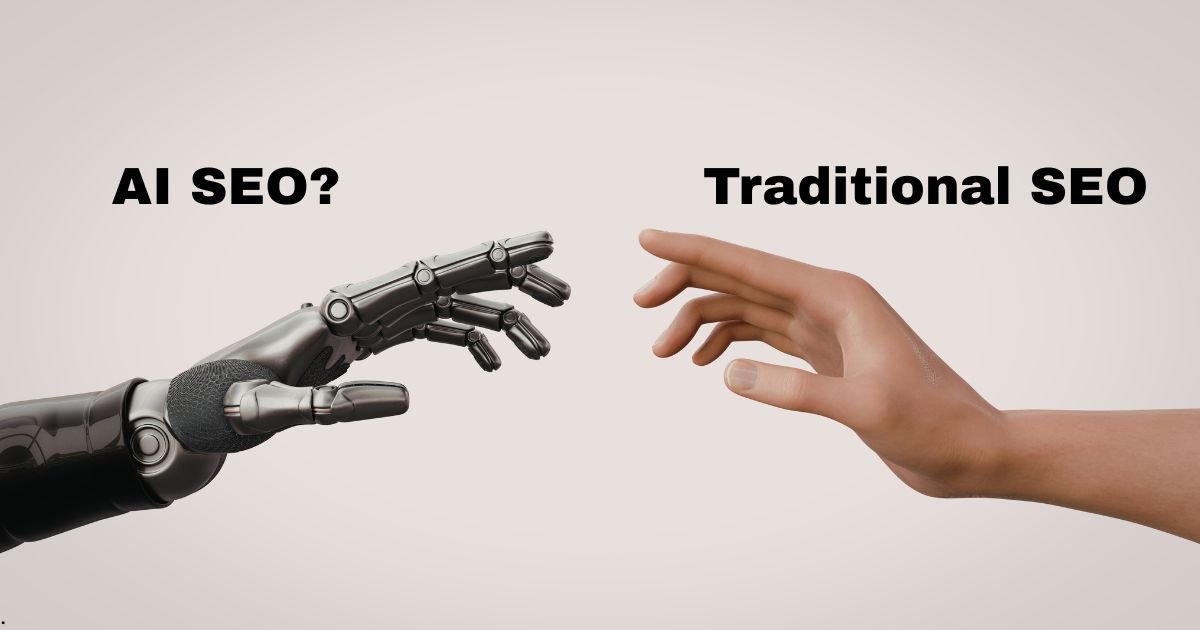
Traditional SEO vs AI SEO: What’s the Difference?
SEO (Search Engine Optimization) is all about getting your website to rank higher on search engines like Google. Over the years, SEO has evolved, and now AI (Artificial Intelligence) is changing the game. But what exactly is different between traditional SEO and AI-powered SEO? Let’s explore.
1. Approach to Research and Strategy
Traditional SEO:
- Relies heavily on manual keyword research and competitor analysis.
- Uses tools like Google Keyword Planner, Ahrefs, or SEMrush to find high-volume keywords.
- SEO strategies are based on historical data, trends, and human intuition.
AI SEO:
- Uses AI algorithms to analyze massive datasets in seconds.
- AI can predict trending keywords, suggest semantically related keywords, and optimize content for search intent.
- Strategies are data-driven and constantly updated based on real-time search patterns.
Example:
Traditional SEO might take a few hours to research 20–30 keywords, while AI SEO can analyze thousands of keywords, user intent, and competitor data almost instantly.
2. Content Creation
Traditional SEO:
- Content is created manually, based on keyword research and optimization guidelines.
- Writers optimize meta tags, headings, and content for specific keywords.
- Can be time-consuming and prone to human error.
AI SEO:
- AI tools can generate or assist in creating content optimized for keywords, readability, and search intent.
- AI can help identify topic clusters, generate meta descriptions, and even suggest internal linking opportunities.
- Speeds up content creation while maintaining optimization standards.
Example:
A traditional SEO approach might take a full day to write a 1,000-word article with proper keyword placement. AI SEO tools can suggest or draft the article in minutes with SEO-ready structure.
3. Optimization and Technical SEO
Traditional SEO:
- Requires manual audits of website structure, speed, mobile responsiveness, and crawl errors.
- SEO experts fix errors based on periodic checks and reports.
AI SEO:
- AI-powered tools can continuously monitor your website for technical issues.
- AI can automatically suggest fixes or optimizations for site speed, schema markup, content gaps, and even voice search readiness.
- Reduces human error and speeds up the technical optimization process.
4. Predictive Analysis
Traditional SEO:
- Success is measured after the fact — rankings, traffic, and engagement are reviewed periodically.
- Adjustments are reactive rather than proactive.
AI SEO:
- Uses predictive analytics to anticipate ranking changes, user behavior, and trends.
- AI can suggest content updates or link-building strategies before traffic drops or competitors overtake your ranking.
5. Scalability
Traditional SEO:
- Manual work limits how much you can scale — one or two articles per week, manual audits, and keyword tracking.
- Scaling requires hiring more SEO specialists.
AI SEO:
- AI can handle large-scale keyword research, content optimization, and reporting simultaneously.
- Makes scaling a website’s SEO much faster and more cost-effective.
✅ Key Takeaways
| Feature | Traditional SEO | AI SEO |
|---|---|---|
| Keyword Research | Manual, slower | AI-assisted, faster, predictive |
| Content Creation | Human-written | AI-assisted or AI-generated |
| Optimization | Manual audits & updates | Automated, continuous monitoring |
| Predictive Insights | Reactive | Proactive and predictive |
| Scalability | Limited | Highly scalable |
| Speed | Slower | Much faster |
Bottom Line
Traditional SEO is still valuable — it relies on human creativity, intuition, and experience.
AI SEO, on the other hand, enhances traditional SEO with speed, data-driven insights, and predictive power, making it ideal for businesses that want to scale, compete, and stay ahead of trends.
In short:
- Traditional SEO = manual, human-driven, slower
- AI SEO = automated, data-driven, faster, predictive